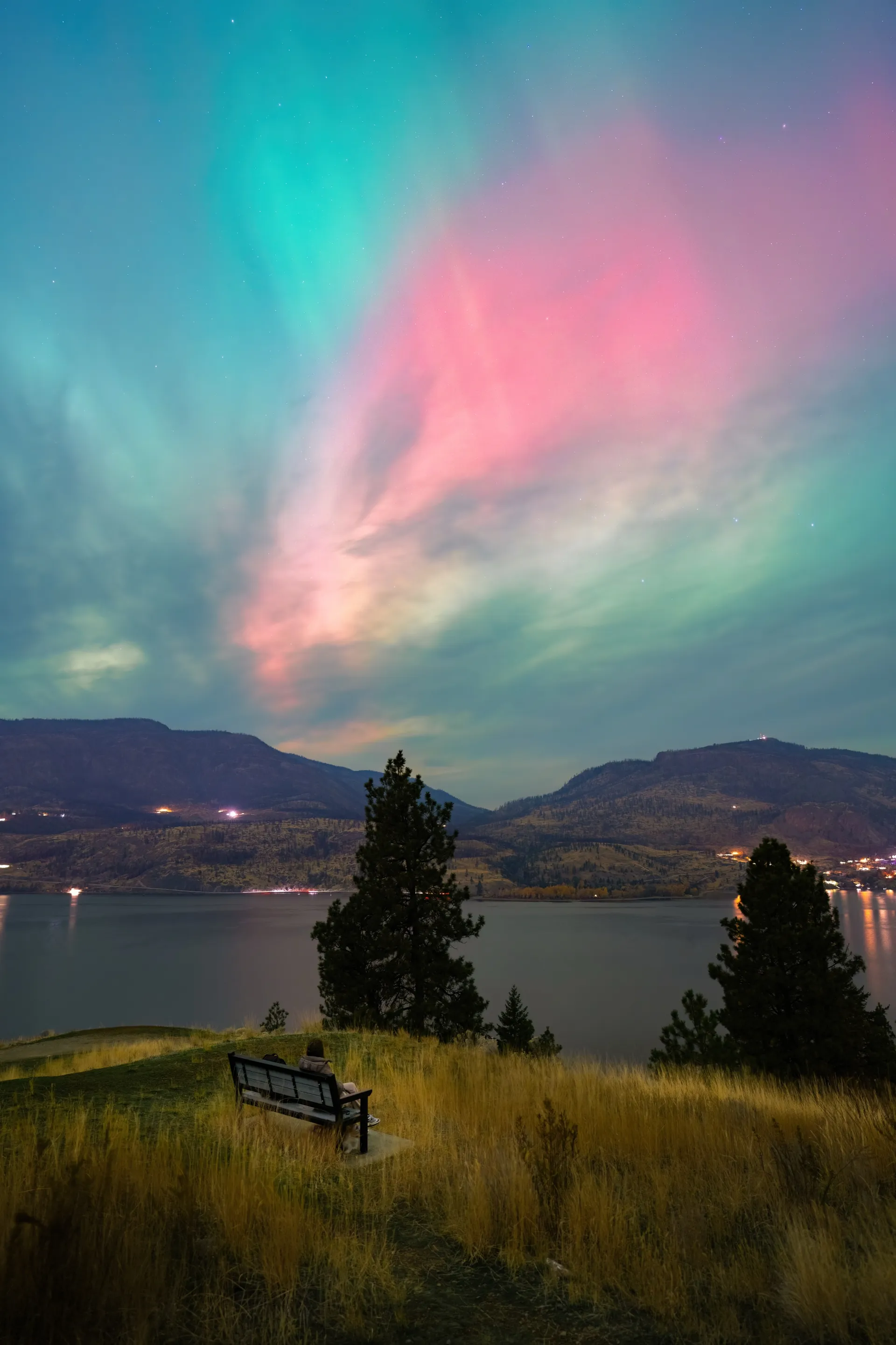
Nobody expects to see the northern lights from Kelowna. That's not an insult to the Okanagan — it's just that aurora borealis has always felt like something you go to Iceland or the Yukon for, not somewhere you drive two hours inland from Vancouver. Then came 2024, and then 2025, and suddenly we had two of the strongest aurora seasons in recent memory. The Okanagan was lit up on multiple nights, and the images coming out of the valley were genuinely wild.
I've now shot aurora from several spots around Kelowna and the surrounding area, and I want to give an honest account of what that experience is actually like — the planning, the waiting, the moments when it suddenly goes from "maybe something in the sky" to "everything is green and you can't stop shooting."
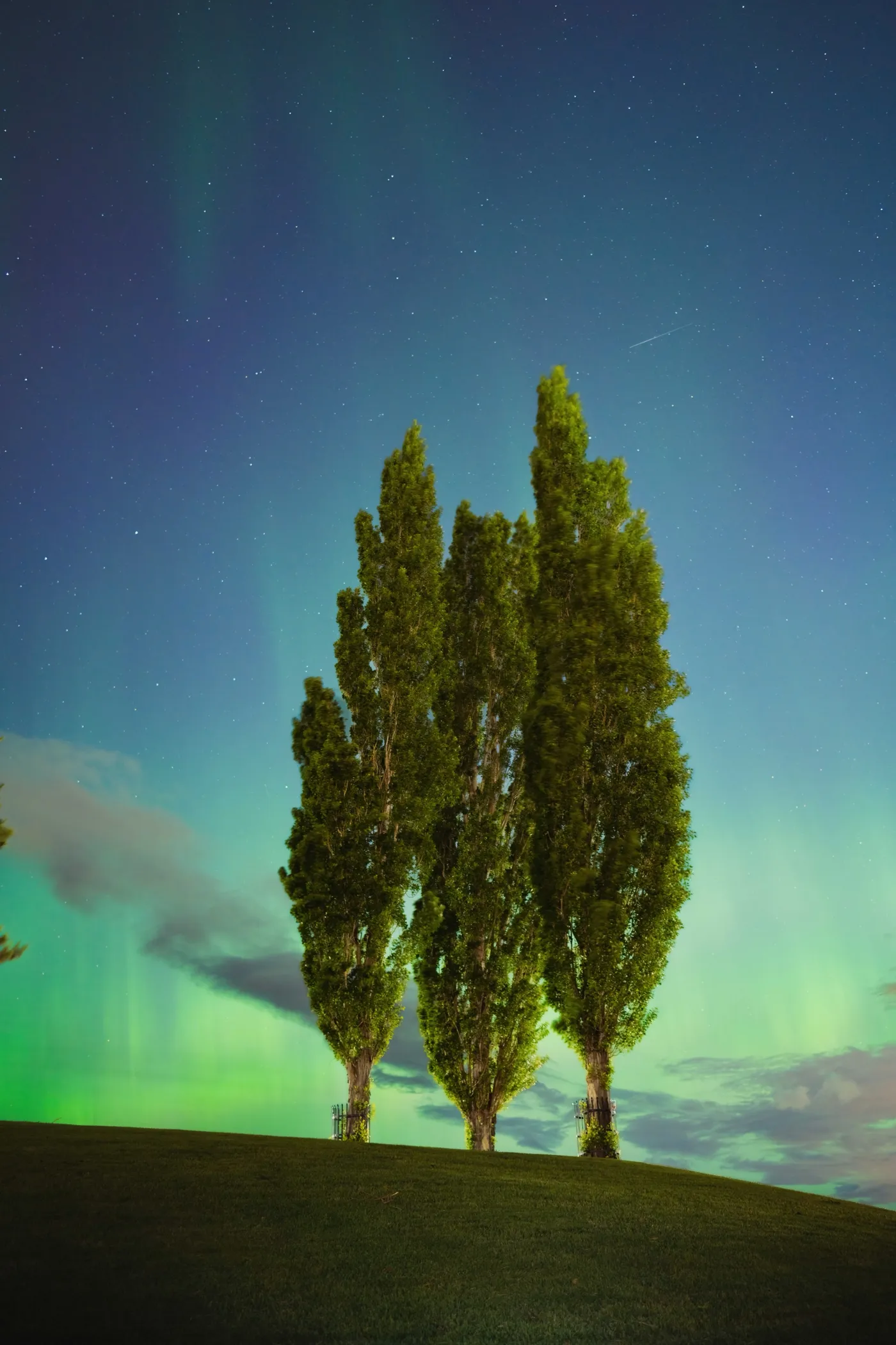
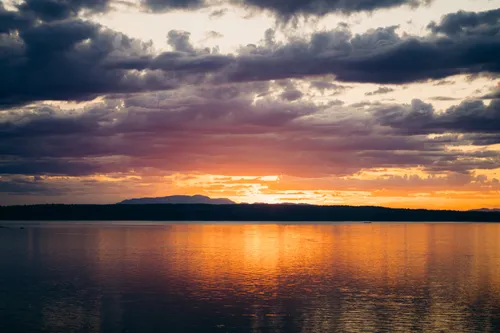
Okanagan Lake on a strong aurora night — the reflection doubles the impact and adds a foreground that pure sky shots don't have.
The Okanagan Isn't a Natural Aurora Destination. That's the Point.
Most serious aurora photography happens at high latitudes — Yellowknife, Whitehorse, northern Scandinavia. The Okanagan is at roughly 49 to 50 degrees north, which under normal solar conditions is too far south to see much. But solar maximum cycles change things. During a strong geomagnetic storm, the aurora oval expands southward and suddenly the lights are visible well into BC's interior.
What the Okanagan offers that northern destinations often don't is foreground. Okanagan Lake is enormous — 135 kilometres long — and on a calm night it mirrors the sky perfectly. The mountains that ring the valley give you dark silhouettes at the horizon. The orchards, the bench roads, the vineyard terraces — all of it becomes interesting foreground when there are green curtains in the sky above it.
Shooting aurora in Kelowna isn't about chasing the lights to the best latitude. It's about having a uniquely beautiful landscape ready when the lights show up here.
Locations That Actually Work
Not every spot in Kelowna is good for aurora. The city itself has enough ambient light to wash out a weak display, though a strong one will overpower it. For cleaner conditions, you want to be slightly outside the urban core, facing north, with a dark horizon and ideally some water in the foreground.
The lakeshore north of the city is a consistent first choice. The lake stretches away to the north, and on a calm night the reflections are extraordinary. You're close enough to get back quickly if the display fades, far enough to cut down the light pollution.
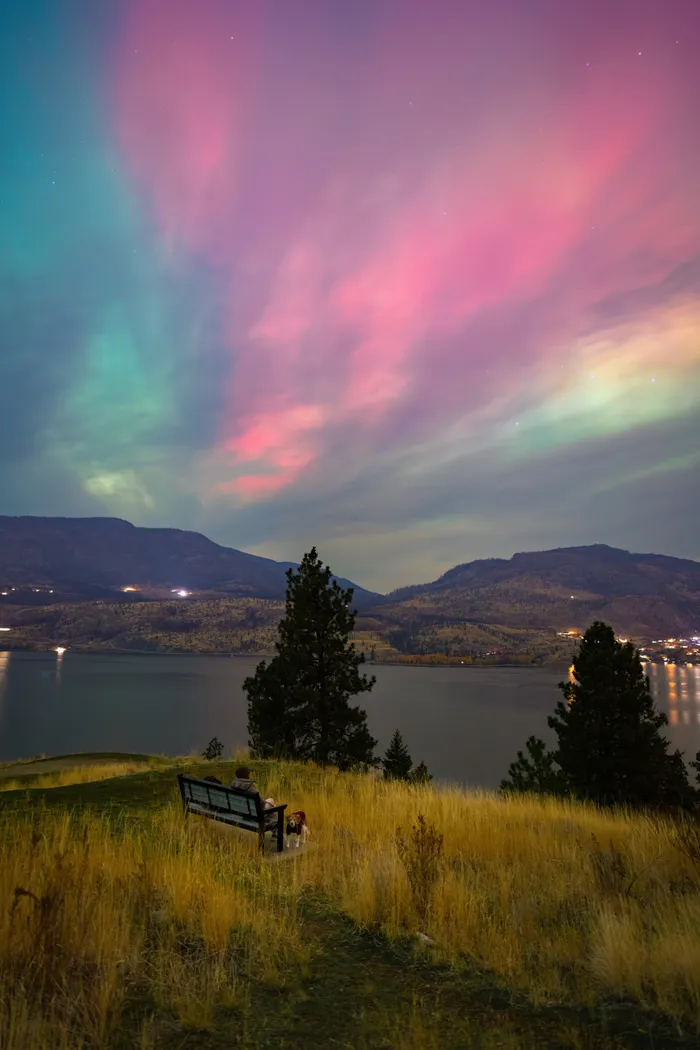
The benches above the East Kelowna orchards give elevation and a wide view. On nights where the aurora was dancing overhead rather than sitting on the northern horizon, the elevated positions captured the full curtain spread in a way that low lakeshore spots couldn't.
Knox Mountain, right at the edge of the city, has surprised me more than once. It cuts light pollution on the north-facing slopes, and the combination of city glow below and aurora above creates an image that tells a very specific story about where you are.
The Part Nobody Talks About: Waiting
Aurora photography is mostly sitting in the dark checking your phone. The KP index, the solar wind speed, the Bz component of the interplanetary magnetic field — you end up knowing more about space weather than you ever expected to. Apps like SpaceWeatherLive and My Aurora Forecast become nightly habits during a solar maximum.
The waiting isn't miserable. Sitting on the edge of Okanagan Lake at midnight in June, when the air is warm and the water is still, is genuinely pleasant. But it's worth being honest that maybe one in three alerts translates into something worth photographing from this latitude. The other two nights you get a faint greenish smear on the horizon that registers on camera but wouldn't excite anyone who wasn't already invested in the chase.
The nights when it actually fires up — when the whole sky goes green and pink, when the curtains are moving faster than you can reframe — those are the nights that make every cloudy, uneventful stakeout worth it.
Camera Settings: A Practical Starting Point
Aurora is brighter than most people expect when it's active, and faster-moving than the long exposures that most night photography demands. A 15 to 25 second exposure at f/2.8, ISO 1600 to 3200, is a reasonable starting point from Kelowna with a modern mirrorless camera. When the display is strong and dancing quickly, I'll push to shorter exposures — five to eight seconds — to freeze the movement and get structure in the bands rather than a smooth smear of green.
Wide lenses win. A 14mm to 24mm on a full-frame camera captures enough sky to show the full sweep of the display while still fitting in meaningful foreground. Fisheye shots of aurora can look impressive but they distort the mountain shapes, which in the Okanagan is half the point.
A sturdy tripod is non-negotiable — not because of the shutter speeds, which are short enough to hand-hold in emergencies, but because you'll be adjusting composition constantly and you want a stable base to return to between shots.
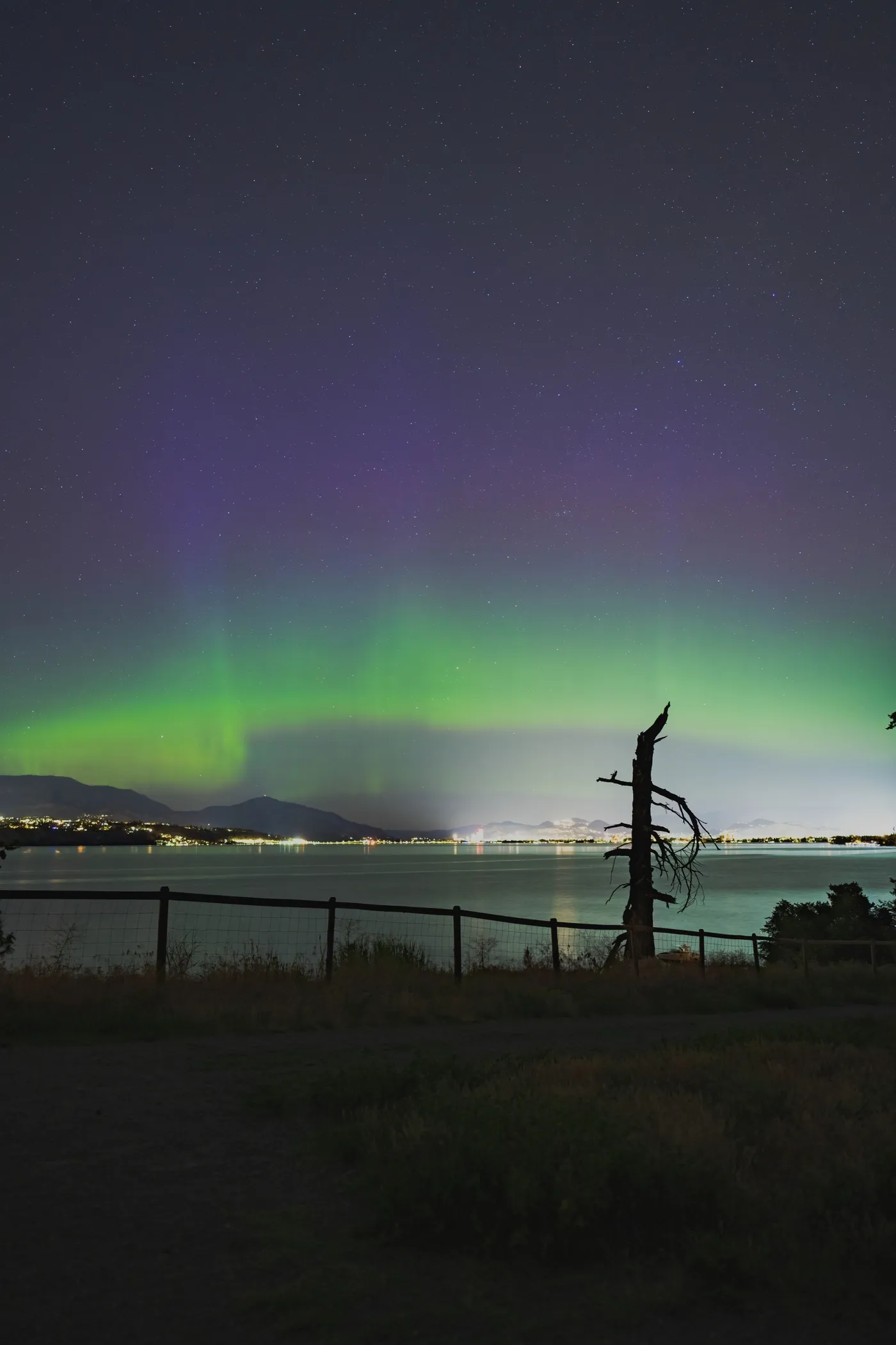
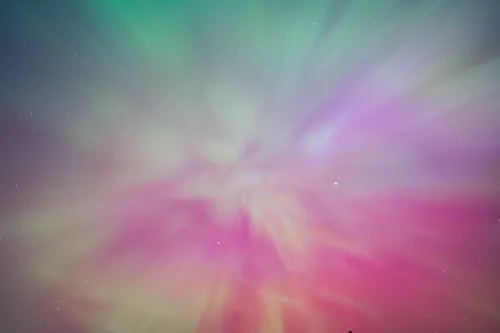
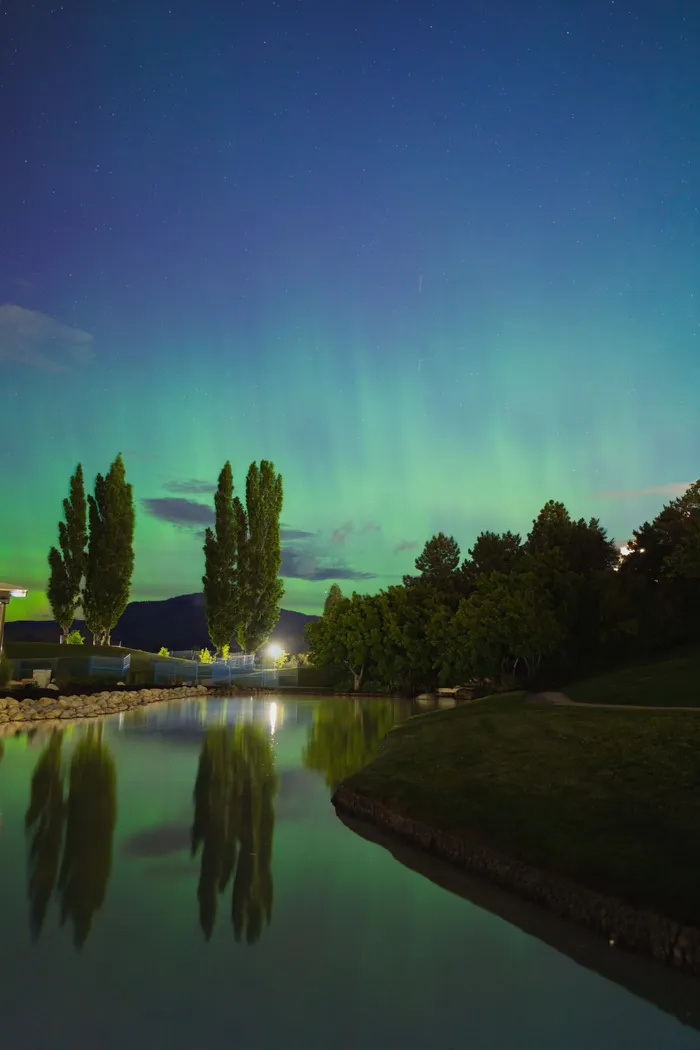
Night two of the June 2025 aurora event — the display was quieter but the colour was more complex, with purple and magenta bleeding into the green bands.
When to Go
The two strongest aurora events I've witnessed and photographed in the Okanagan were in May and June of 2024 and 2025. Solar maximum is expected to continue through the mid-2020s, which means the window for seeing aurora this far south is still open — though not indefinitely.
Kelowna's summer nights are short, which is a trade-off. In June you're working with a window of maybe four to five hours of genuine darkness. But the summer also means warmer temperatures, clear skies more consistently, and no wind-chill math before you decide whether the forecast is worth chasing.
For the best chance: watch for KP index forecasts above 5, pick a night with no moon, and have a north-facing location with good foreground ready to go. The rest is luck and timing — which is true of every kind of photography worth doing.
You can see more of my aurora and night photography in the Astro & Low Light portfolio. If you're interested in landscape or nature prints from the Okanagan, take a look at the prints page or get in touch.