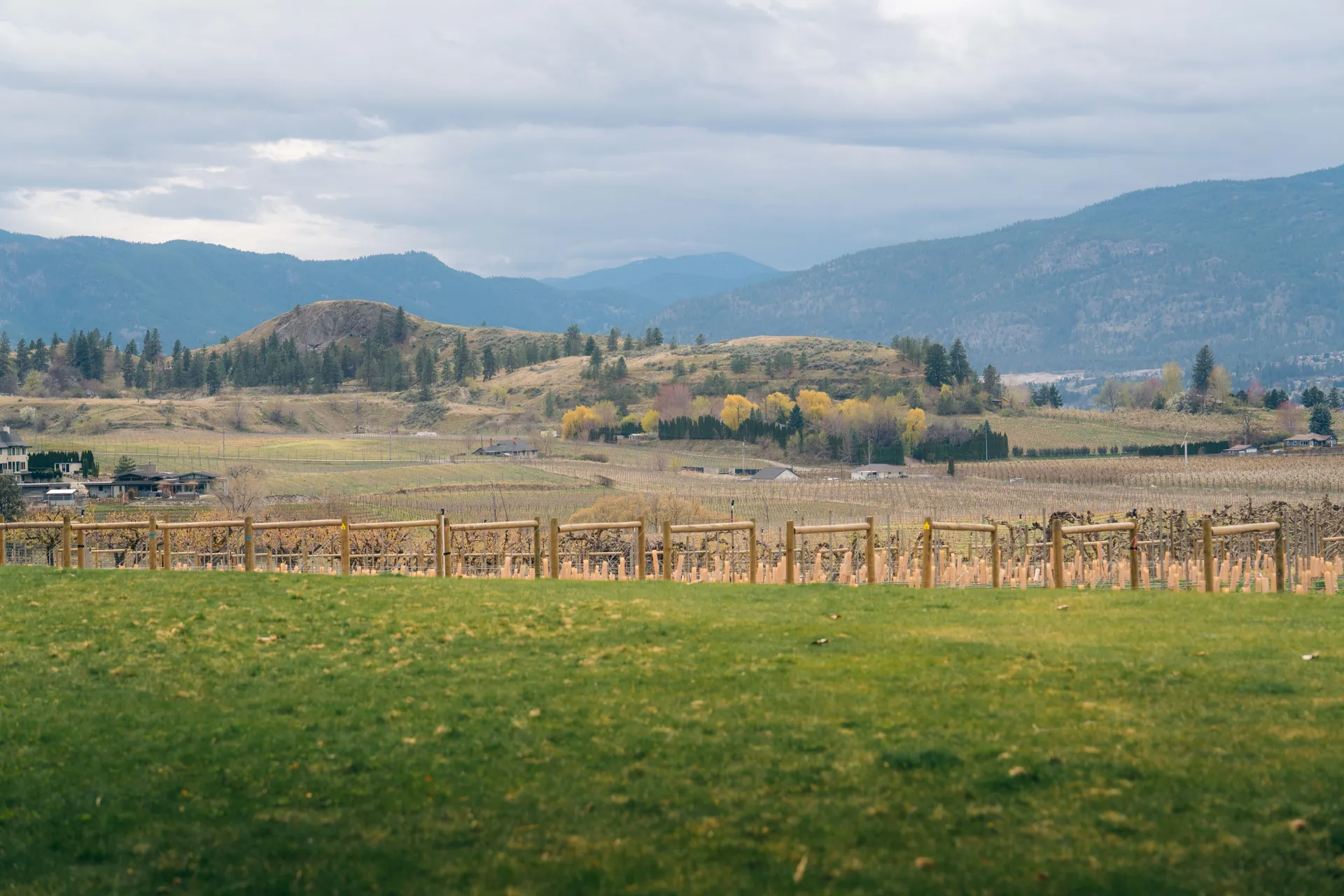
The Okanagan has one of the most photographable wine regions in the country. That's not a marketing line — it's just the reality of what happens when you put vineyards on a valley bench above a lake, with desert hills behind them and a mountain range further back. The light here is different. The scale is different. And for wineries trying to communicate what makes their property worth the drive, the photography either does that job or it doesn't.
I've been shooting across the Okanagan Valley for years now — from Kelowna down through Summerland and Penticton — and the winery shoots are consistently some of the most technically demanding and visually rewarding work I do. Here's an honest look at how these sessions actually unfold.
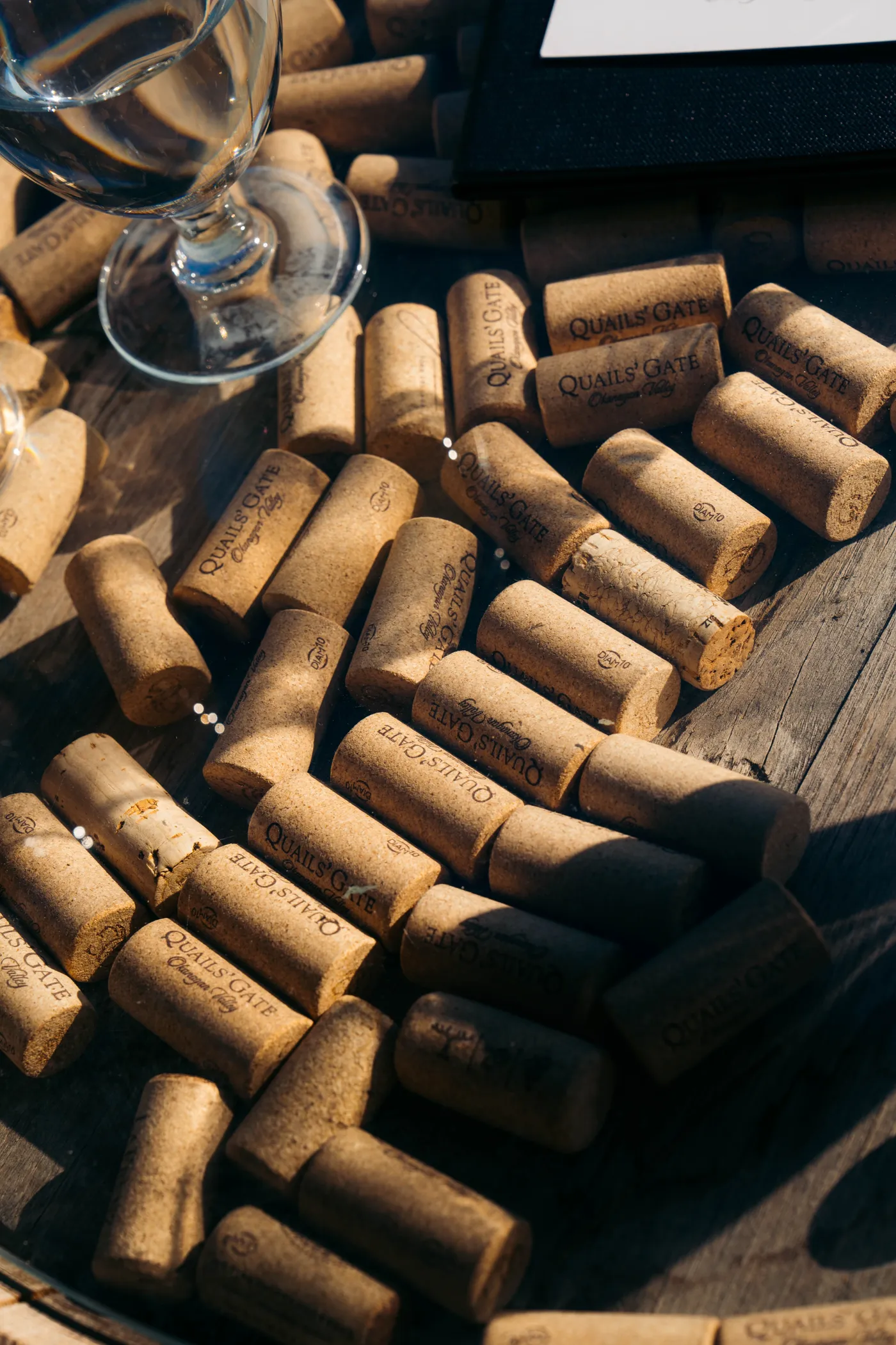
The tasting experience is as much about small details as it is the wide shot — corks, glassware, natural light doing the work.
It Starts With the Light, Not the Wine
Every winery shoot I plan starts with the same question: when does the light hit your vines? Not your tasting room, not your logo on the bottle — your vines. The rows of planted grapes on a sloped bench, catching angled sun, with the valley dropping away behind them. That's the image that stops someone mid-scroll.
In the south Okanagan, golden hour arrives later in the evening in summer and swings dramatically through the valley depending on your elevation and which direction your rows face. Some vineyards light up perfectly at 7pm in July. Others are better at 6am, when the fog is still sitting on the lake and the hills are backlit. The planning conversation with a winery is often more about the calendar and the clock than the subject list.
This is the part of a shoot that doesn't show up in the final gallery but determines everything in it.
The Three Shots Every Winery Actually Needs
There's a temptation in winery photography to cover everything — every corner of the property, every bottle in the lineup, every view from every angle. I've seen briefs that read like inventories. But the images that actually drive traffic to a property, that get shared, that end up in travel guides and tourism campaigns, tend to fall into three categories.
The landscape anchor. A wide shot that establishes the scale and beauty of the property. Vineyard rows receding toward mountains or lake. Shot from a slightly elevated position, ideally with good separation between the vine canopy and the sky. This is the image that answers "where is this place?" before anyone has read a word of copy.
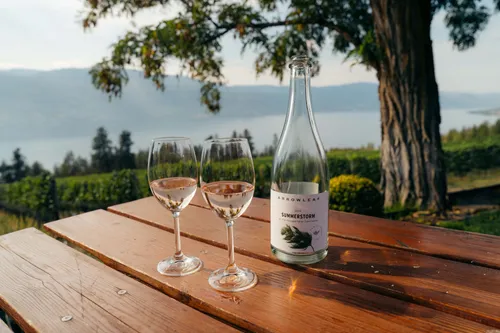
The tasting experience. Wine in a glass, on a table, with the view beyond. Not a product shot — a lifestyle shot. There's a difference. A product shot isolates the bottle against a clean background. A lifestyle shot puts a glass of rosé on a rail with the Okanagan hills in the soft background at dusk, and the person looking at it immediately starts planning a trip.
The human moment. Someone in the space — staff, a guest, the winemaker in the cellar. The Okanagan wine industry runs on hospitality and personality, and the best wineries have a face. That face should be in the photography.
What the Okanagan Does That Other Wine Regions Don't
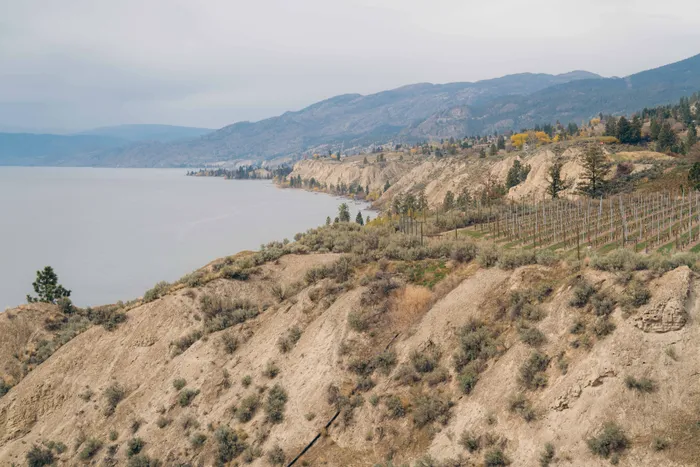
I've photographed in wine regions that are beautiful but essentially one-note. The Okanagan isn't like that. Within a single shoot day you can go from the desert heat of the south — cactus, sage, red-brown rock — to the green corridors around Kelowna where the lake is wider and the landscape feels more Pacific Northwest. That range is an asset that most Okanagan wineries underuse in their photography.
The best winery photography doesn't just show a property. It places that property inside a region — and makes the region itself feel worth travelling to.
When I'm shooting in Penticton or around the Naramata Bench, I'm always thinking about how the background contextualizes the foreground. The mountains behind a vineyard aren't just scenery. They're a signal to someone in Vancouver or Calgary that this is a specific place, with a specific character, that you can't experience from a wine shop shelf.
The Part Nobody Talks About: Interiors Are Hard
Vineyard exteriors are demanding but forgiving — natural light, open space, you can reframe quickly. Tasting room interiors are a different problem. Most winery tasting rooms were designed for the experience of being inside them, not for being photographed. Low ceilings, mixed light sources, dark wood, narrow barrel rooms — all of it fights the camera.
The challenge is making a space feel as warm and inviting as it does in person, without blowing out the windows or losing the texture of the space in the shadows. That usually means a combination of natural light management, careful timing (some rooms are best in the morning, some at midday), and knowing when to add light subtly and when to leave it alone entirely.
A great tasting room that photographs flat is one of the most common missed opportunities in Okanagan winery marketing. The guests already love it. The photography just hasn't caught up yet.
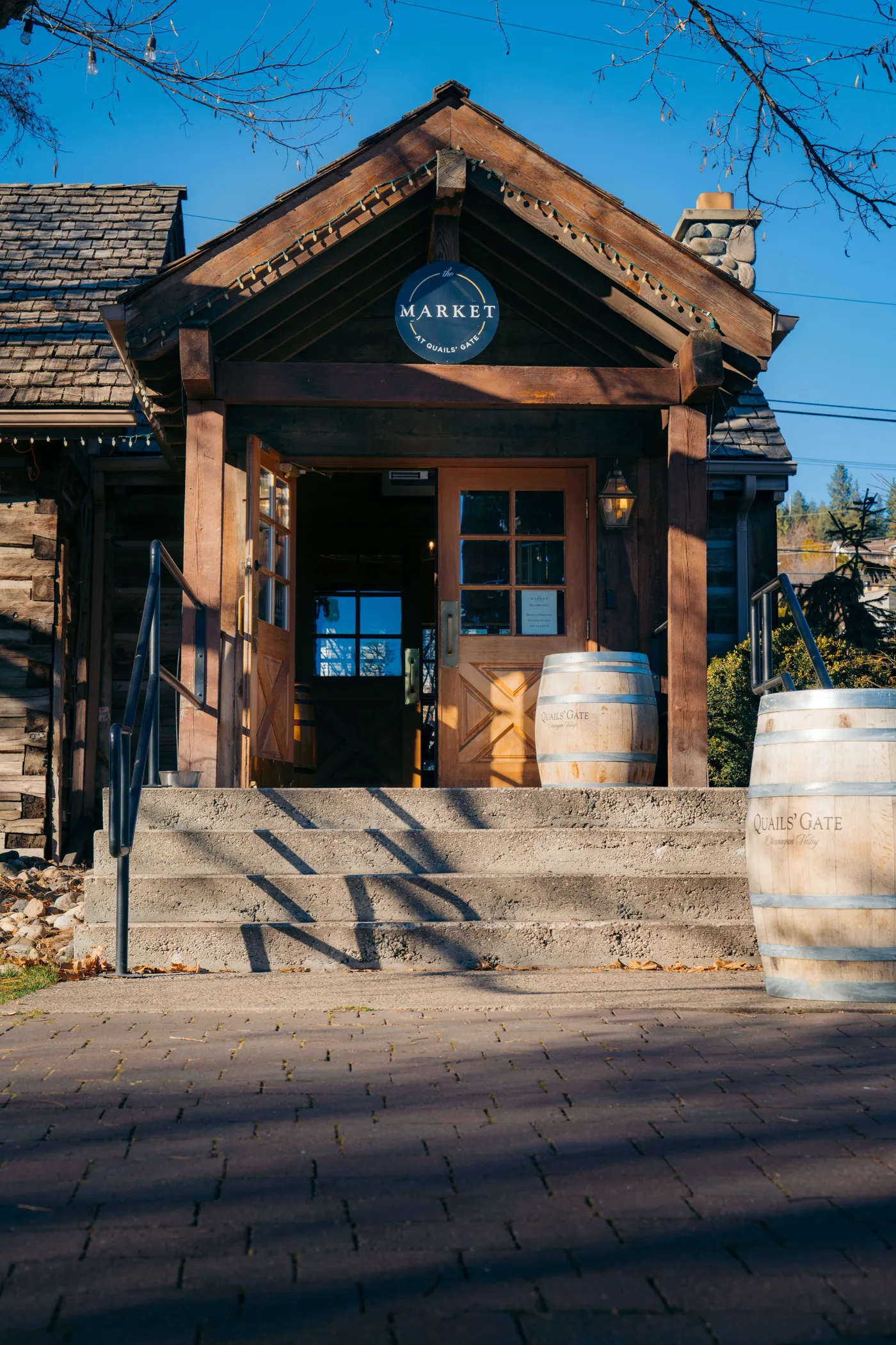
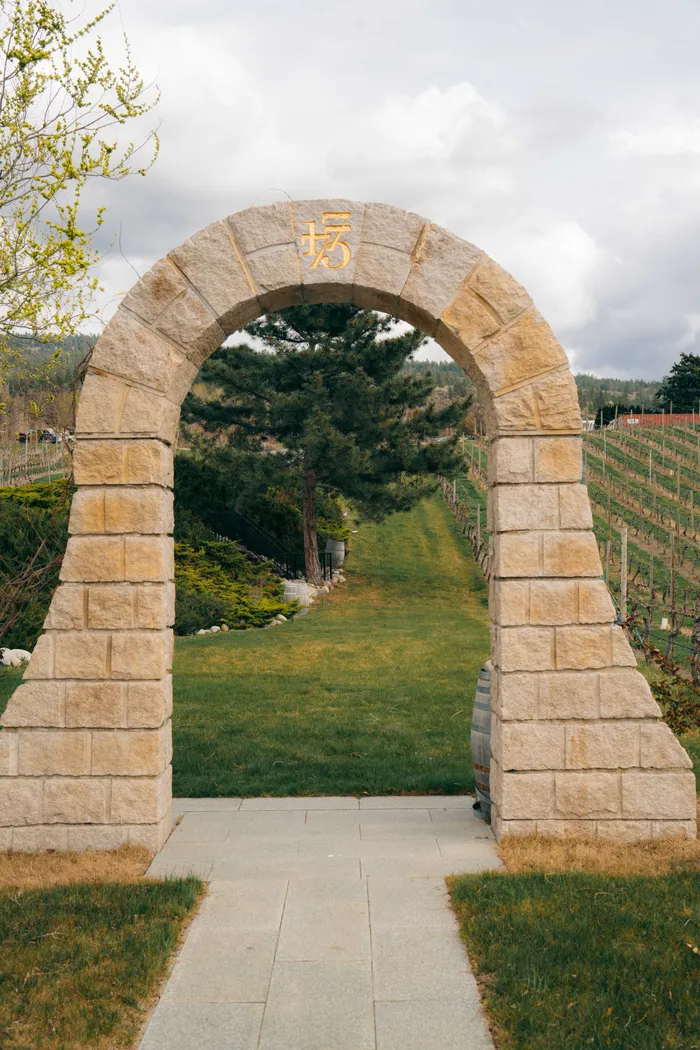
Barrels and rustic architecture do a lot of the storytelling before anyone has stepped inside — the exterior is the first impression.
Why This Work Matters Beyond the Feed
The obvious use case for winery photography is social media and the website. But the images I've shot across the Okanagan have ended up in places well beyond that: BC tourism publications, travel features, wedding venue inquiries, press trip coverage. A strong image library compounds over time in a way that mediocre photography simply doesn't.
Wineries that invest in photography aren't just buying content for this season's Instagram. They're building an asset that represents the property to journalists, travel agents, tourism boards, and event planners — people who have never visited and are making decisions based entirely on what they can see.
The Okanagan wine industry is competitive enough that the wineries doing this well have a clear edge. The ones that aren't are leaving that edge on the table.
If you're a winery, resort, or tourism property in the Okanagan looking to build a visual library that actually works as hard as you do, I'd love to hear about your property. Take a look at my Tourism Photography and Hotels & Resorts portfolios, and reach out when you're ready to talk.