Most product photography happens on a white seamless backdrop with studio strobes — clean, controlled, and honestly a little dull for anything marketed as an outdoor product. When I shot this LARQ self-cleaning water bottle, I made the opposite call: no studio, no backdrop, just the bottle in the actual environments someone would use it — forest floor, open sky, held in hand outdoors. Here's the thinking behind it, and what changes when you take a product outside.
Why Location Over Studio, for This Product
- A water bottle marketed for hiking and travel should be photographed doing exactly that — context sells harder than a clean cutout
- Natural light and real backgrounds do more emotional work than studio lighting can fake
- It doubles as lifestyle content, not just a product shot — usable across a brand's website, social, and packaging
- The trade-off: less control. You're working with whatever light and weather you get that day
Shoot Wide Open for Separation
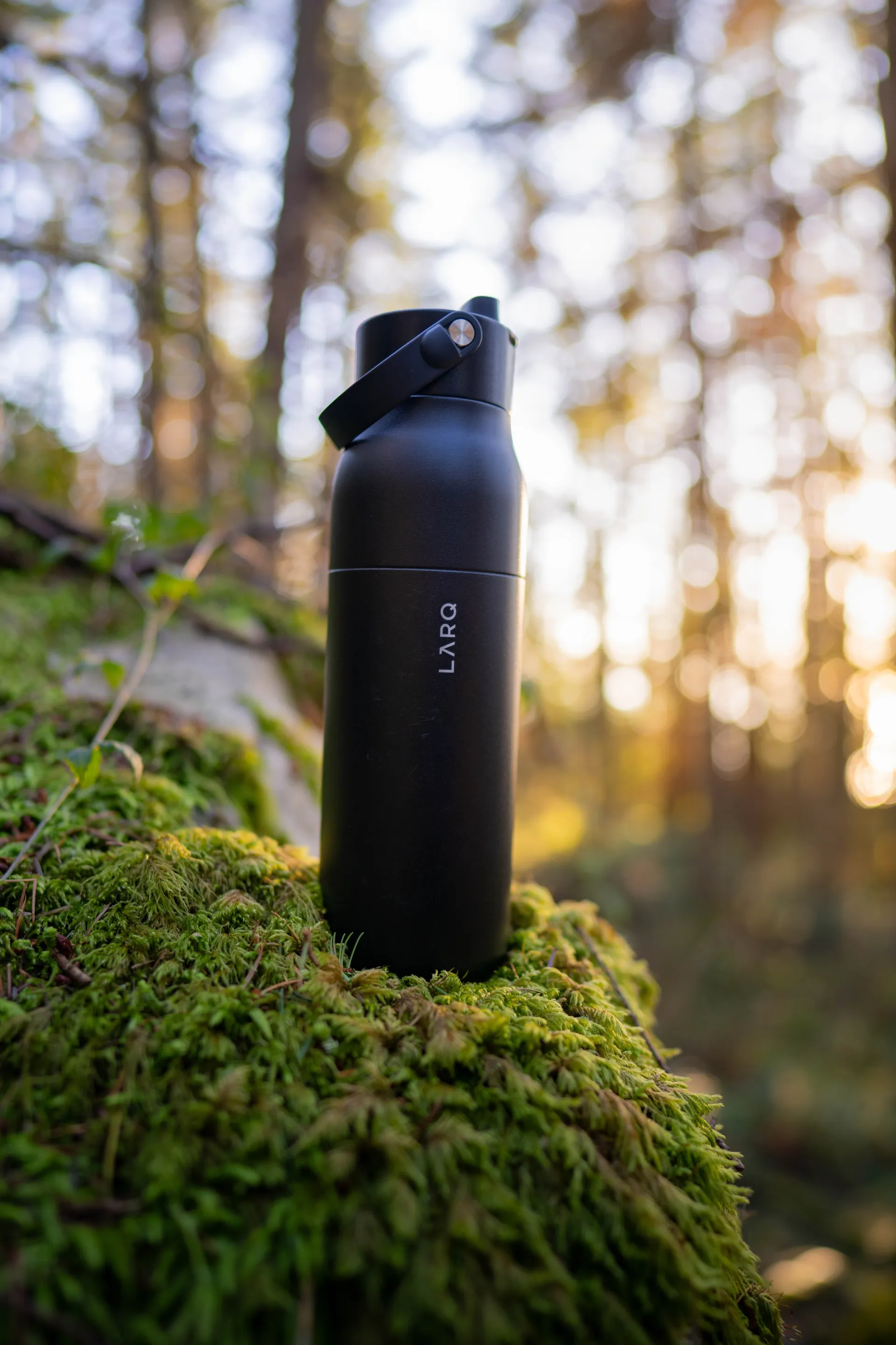
Outdoors, you don't have a studio backdrop isolating the product — you have to create separation with the lens instead. Shooting at a wide aperture (f/1.8–f/2.8) throws the background into soft blur, so the bottle stays sharp and the eye has nowhere else to go, even against a busy background of trees or sky.
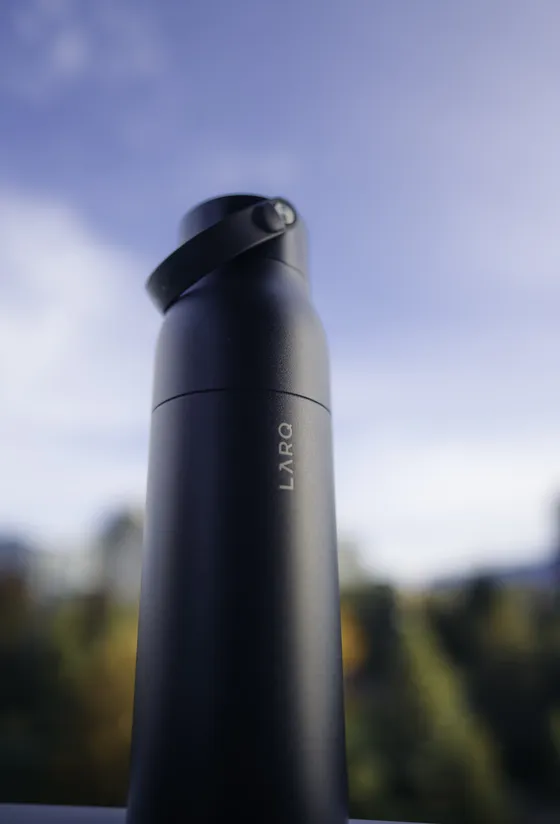
Let the Product Interact With a Person
Some of the strongest frames in this set aren't the bottle alone — they're the bottle held up against the sky, caught mid-use. A hand in frame gives scale and a sense of a real moment, which does more for a product like this than a static hero shot ever could. Mix both: clean product-only frames for catalog use, in-hand frames for lifestyle marketing.
Ground-Level Shots Change the Whole Feel
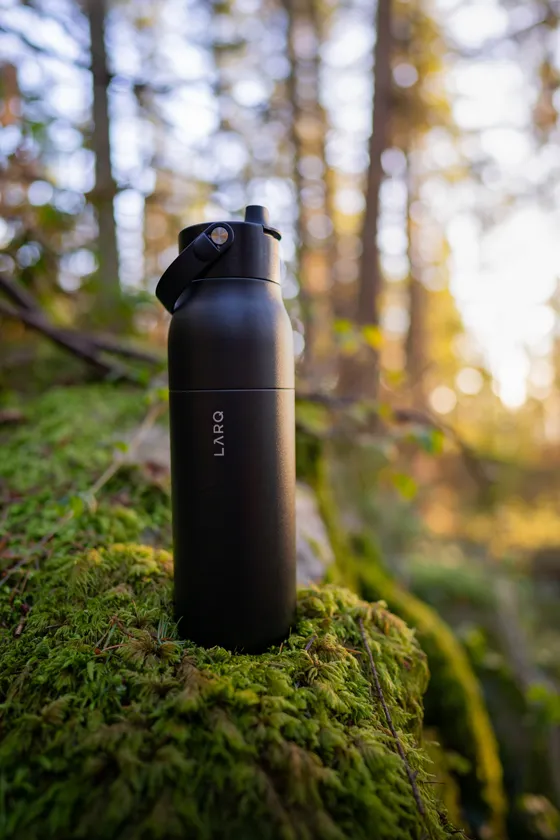
Setting the bottle on moss, forest floor, or a log and shooting from low, close to the ground turns a straightforward product shot into something that feels editorial — closer to how a magazine would shoot gear than how a catalog would. It also plays to whatever texture is around: moss, bark, and dappled light all become part of the composition instead of just a backdrop.
Match Light to the Product's Story
Dappled forest light filtering through a canopy and hitting bokeh in the background does a lot of the visual work for free — it reads as adventurous and outdoorsy without a single word of copy. Chase that kind of light deliberately rather than shooting whenever's convenient; the backdrop light is doing as much marketing as the product itself.
Get Close for the Branding Shots
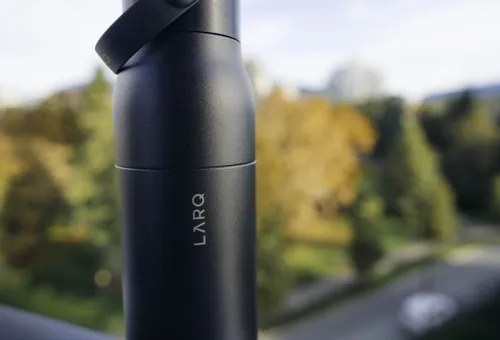
Every product set needs a handful of tight, straightforward frames where the logo and details are clearly legible — even the most artful lifestyle shot doesn't replace a clean close-up a brand can actually use on a product page. Shoot both, deliver both; don't assume the client only wants the moody wide shots.
The best product photography for an outdoor brand doesn't look like it happened in a studio — it looks like proof the product actually works out there.
Wrapping Up
Taking a product outside trades control for authenticity — you can't perfectly light a forest, but you also can't fake the way real light falls through a canopy in a studio. For brands whose products live outdoors, that trade is usually worth making. It's the same instinct that drives most of my commercial work: shoot the thing where it's actually meant to be used.
See more brand and commercial work in my Commercial portfolio, or read about choosing a brand photographer who understands this kind of shoot.